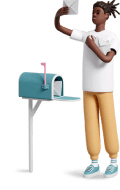
Creator commerce is the model where content creators stop being middlemen for other people's brands — and start owning their own curated storefronts. It is the evolution of the creator economy, and it is already reshaping how 200 million creators worldwide earn a living in 2026.
You post three times a week on TikTok. You've crossed 10,000 followers on Instagram. People in your DMs ask you daily where you got that lipstick, those earbuds, that hair product. And yet — the cheque at the end of the month doesn't match the effort.
If that sounds familiar, you're not alone. According to Linktree's 2023 Creator Report, 66% of creators globally want to monetize their audience but have not found a reliable model. Brand deals are unpredictable. Affiliate links pay 2 to 10 percent on a good day. Starting a Shopify store is expensive, technical, and asks you to hold inventory you can't afford.
Creator commerce is the answer to all of those problems. In the next 10 minutes, you'll understand exactly what it is, why it works, and how to use it to turn the audience you already have into real, recurring income.
Free download: Before you scroll, grab the Creator Commerce Starter Kit — a 12-page PDF that walks you through every step in this guide, with templates for your first storefront and first three posts.
→ Get the free PDF
Creator commerce is a business model in which a content creator runs their own branded online storefront, curates products from a larger supply catalog, and sells directly to their audience — without holding inventory, running ads, or building a website.
Three things define it, and all three must be present for something to qualify as real creator commerce:
The combination of those three — ownership, no inventory, and a real commission — is what makes creator commerce fundamentally different from affiliate marketing, brand deals, or running a traditional eCommerce store.
To understand why creator commerce is worth your attention in 2026, it helps to see it next to the other four income models creators currently use.
A brand pays the creator a fixed fee to post sponsored content. The creator has no upside if the post drives huge sales, and the brand controls the creative. The income is unpredictable and entirely dependent on being "liked" by brands. Most creators with under 20K followers don't get brand deals at all.
The creator shares a link or code and earns a small commission when a follower buys. Commission rates are usually 2–10%. The creator has no ownership — they are essentially a free salesperson for someone else's brand. LTK, Amazon Associates, and ShopMy all sit here.
The creator builds their own website, imports inventory, manages logistics, handles customer service, and runs ads. Fully in control, but also fully responsible. Requires real capital, real time, and real technical skill — which 80% of creators don't have.
The creator goes live and sells products in real time. Powerful and fast-growing, but demands a specific format, heavy platform dependence, and access to product catalogs that are often locked to specific markets.
The creator opens a branded storefront on a platform that handles inventory, payments, and fulfilment. They curate products, promote them naturally through their existing content, and earn 15–25% on every sale. No inventory. No website. No brand deal required.
The thing that makes creator commerce the most durable of the five is that it combines the ownership of traditional eCommerce with the zero-friction entry of affiliate marketing. You get a real business with the ease of a bio link.
Three forces are colliding in 2026 to make creator commerce the single fastest-growing business model in the creator economy.
1. Social commerce has crossed the trust line. Global social commerce sales are projected to hit $1.2 trillion in 2025 (eMarketer). Buyers — especially Gen Z — now trust a creator's recommendation more than a brand ad. That trust converts. TikTok Shop alone generated over $20 billion in GMV in 2024.
2. Creators are outgrowing affiliate links. Creators with engaged audiences of 5,000–50,000 followers are realising that 5% affiliate commission on a $20 product (= $1 per sale) is not a business. When those same creators earn 20% on a curated $40 product (= $8 per sale), the economics change completely.
3. Platforms are finally building for creators, not merchants. The first wave of eCommerce was built for big brands. The second wave (Shopify) was built for small merchants. The third wave — creator commerce — is built for people who already have an audience and just need the infrastructure to monetize it. RB Marketplace sits firmly in this third wave.
Creator commerce has a property that traditional eCommerce doesn't: every new creator who joins a platform makes the platform more valuable for every other creator.
Here's why. When a new beauty creator opens a store on RBM and starts selling to her 8,000 TikTok followers, three things happen simultaneously:
Multiply that by 100 creators. Then 1,000. Then 10,000. That's the flywheel. It's the same mechanism that built Meesho to 150 million users in India and LTK to over $4 billion in annual GMV. And it's the mechanism that makes creator commerce not just a trend, but a structural shift in how internet commerce works.
Because this is a newer model, there's a lot of confusion. Let's kill the five biggest misconceptions in one go.
The short version: if you create content on any social platform and have at least 1,000 people who genuinely engage with what you post, creator commerce is for you.
The longer version is shaped by three archetypes we see regularly on RB Marketplace:
Notice what's not on that list: "influencers with 500K+ followers". Big influencers don't need creator commerce — they have agents and brand deals. Creator commerce is primarily a game-changer for the 200 million creators below that tier who have been left out of the creator economy economics until now.
If this is the first time you've heard the term "creator commerce," the gap between reading this article and actually earning from it can feel wide. It's not. The onboarding for most platforms — including RB Marketplace — takes under an hour.
Here's the minimum viable starting kit:
That's the full list. No website, no warehouse, no credit card.
You now know more about creator commerce than 95% of creators currently earning from content. The question is whether you're going to be one of the first wave who rides this shift, or one of the many who watches it happen from the sidelines.
If you want to go deeper, we recommend reading three of our most-read follow-up pieces:
Or, if you're ready to stop reading and start earning, RB Marketplace is the platform built from the ground up for creator commerce. The first 1,000 creators to open a store pay no platform fee in their first year.
No inventory. No website skills. Live in 24 hours. Earn 15–25% on every sale.
Free to start. No monthly fee. No credit card required.
About RB Marketplace
RB Marketplace is the creator commerce platform built by a creator, for creators. Founded by Rebecca — a KOL who built the platform she wished existed when she was growing her own audience — RBM gives English-speaking creators worldwide a simple way to open their own branded storefront, curate products from a dropship catalog, and earn from every sale. Learn more about our story at rbmarketplace.com/about.
Related reading
- Meet Rebecca: The KOL Who Built a Marketplace for Creators Like You
- How to Open Your Own Online Store in 24 Hours
- The Creator Economy in 2026: 37 Numbers Every Content Creator Should Know



Khám phá những thông tin chi tiết, xu hướng và phân tích chuyên sâu mới nhất...
Khám phá những thông tin chi tiết, xu hướng và phân tích chuyên sâu mới nhất...
Khám phá những thông tin chi tiết, xu hướng và phân tích chuyên sâu mới nhất...